Kevin James Holland
New member
- Joined
- Jul 8, 2025
- Messages
- 3
Hi folks, good to be here! Thanks in advance for your thoughts.
I'm an amateur mason, and I've only done a couple jobs. When my wife and I had to break up the cementitious floor of our (2nd floor!) bathroom, we decided to tackle pouring the mortar floor and installing the tile ourselves. That project kinda destroyed us, but we decided to continue with our plan to install our shower ourselves. We decided on a pretty traditional shower with some modern technology -- PVC shower pan liner, mud bed shower pan, Hardiback walls, sealing with Redgard etc., and then laying tile. We did lots of research, and have a deep respect for the trades, but we decided this was a job we could do ourselves.
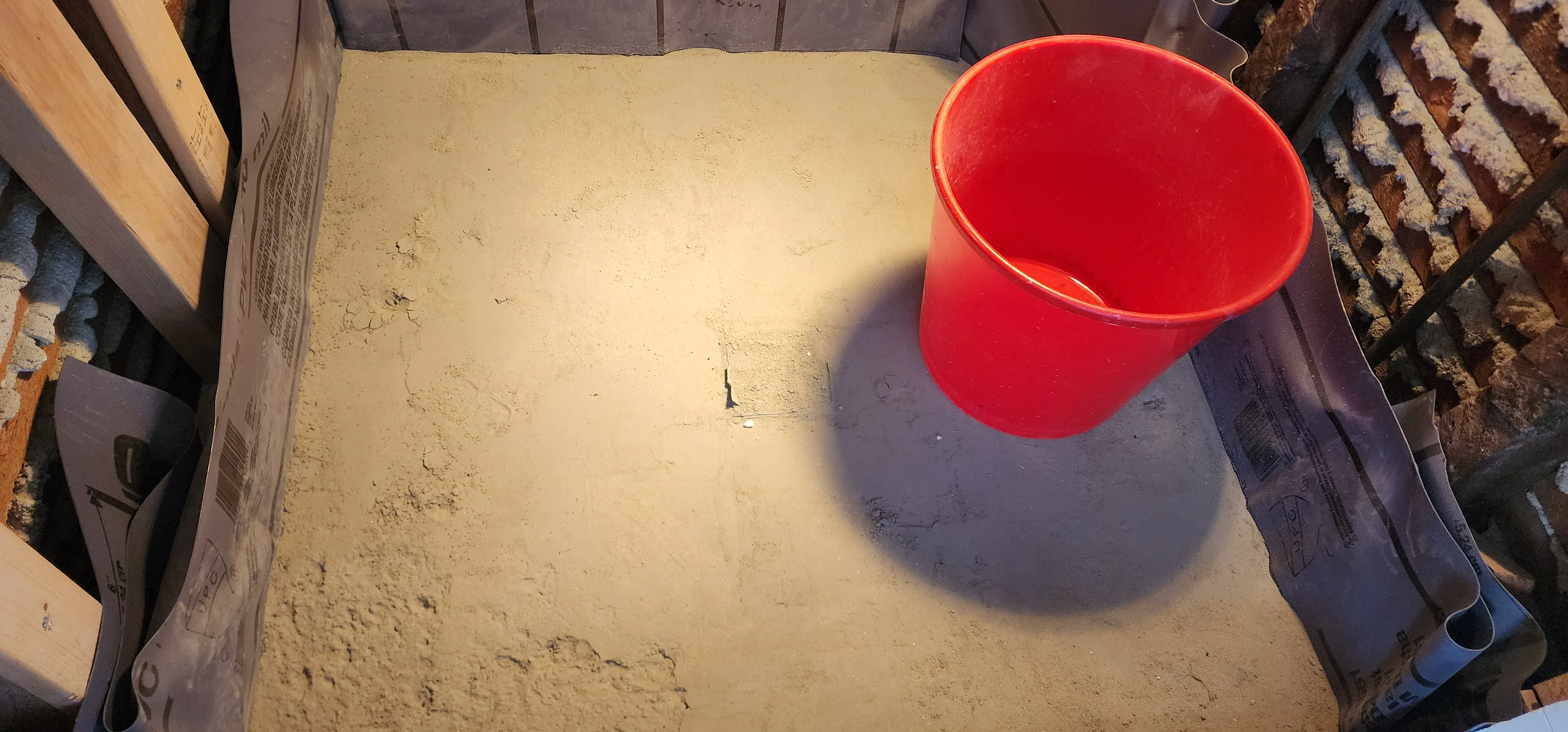
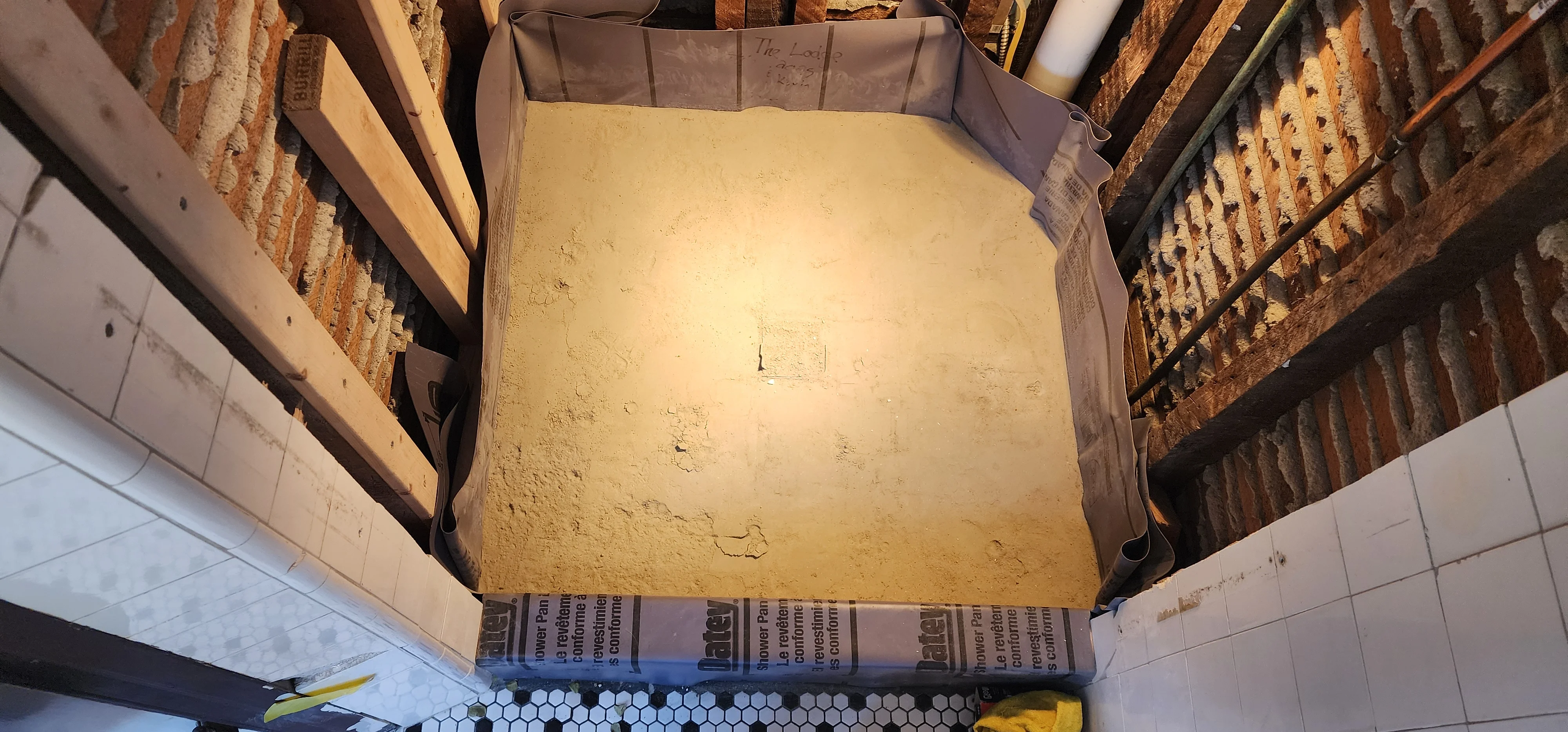
We've now poured the shower pan and let it cure, but the surface is loose/breakable sand. We had mixed it by hand, using Sakreet Sand Mix, and it seems our mix was too dry. Tons of people recommend the "snowball test" -- add water until you can pack your mixture like a snowball, and then you know it's good. After our mortar cured, and I saw the finished product, I watched a clip on one of Bob Doyle's YouTube vids (@StarrTile). He says the snowball test is no good because it will pack in your hands like that at various ratios, so your mix could pack like a snowball and still be too dry. As I watched that video, I saw his mixture was definitely wetter than ours. I've attached a photo and a video of our shower pan mortar. The video shows that a light but firm touch with my finger will break up the surface into loose sand.
The question is, now what? I assume we need to go with Option 1: Break up the mortar, remove all of it, and pour again with more water. And if we do that, I'm afraid that as we remove the mortar that's sitting on the PVC liner, we could compromise the liner. So we should maybe remove that and install a new one. I guess it depends on how easy it is to remove the mortar. But if this shower fails, we'll be breaking up the tile, hardiback, etc, and redoing the entire project.
Option 2 would be to brush off or break up the sandy surface of the mortar and see if it's stronger beneath that top layer. Maybe we could scrape away the part that breaks up and find the bottom is strong, we could pour a better mixture on top of the existing, strong portion. But I don't think that's how the chemical reaction works, and I'm afraid of a bad bond between the existing mortar and the one we would pour over it.
I do believe we can do this job well if we take a second pass. We just made a mistake on our first go.
We just want to get this project finished and have it last. Please let me know how you would advise us to go forward. Thanks!
Yours truly,
Kevin
I'm an amateur mason, and I've only done a couple jobs. When my wife and I had to break up the cementitious floor of our (2nd floor!) bathroom, we decided to tackle pouring the mortar floor and installing the tile ourselves. That project kinda destroyed us, but we decided to continue with our plan to install our shower ourselves. We decided on a pretty traditional shower with some modern technology -- PVC shower pan liner, mud bed shower pan, Hardiback walls, sealing with Redgard etc., and then laying tile. We did lots of research, and have a deep respect for the trades, but we decided this was a job we could do ourselves.
We've now poured the shower pan and let it cure, but the surface is loose/breakable sand. We had mixed it by hand, using Sakreet Sand Mix, and it seems our mix was too dry. Tons of people recommend the "snowball test" -- add water until you can pack your mixture like a snowball, and then you know it's good. After our mortar cured, and I saw the finished product, I watched a clip on one of Bob Doyle's YouTube vids (@StarrTile). He says the snowball test is no good because it will pack in your hands like that at various ratios, so your mix could pack like a snowball and still be too dry. As I watched that video, I saw his mixture was definitely wetter than ours. I've attached a photo and a video of our shower pan mortar. The video shows that a light but firm touch with my finger will break up the surface into loose sand.
The question is, now what? I assume we need to go with Option 1: Break up the mortar, remove all of it, and pour again with more water. And if we do that, I'm afraid that as we remove the mortar that's sitting on the PVC liner, we could compromise the liner. So we should maybe remove that and install a new one. I guess it depends on how easy it is to remove the mortar. But if this shower fails, we'll be breaking up the tile, hardiback, etc, and redoing the entire project.
Option 2 would be to brush off or break up the sandy surface of the mortar and see if it's stronger beneath that top layer. Maybe we could scrape away the part that breaks up and find the bottom is strong, we could pour a better mixture on top of the existing, strong portion. But I don't think that's how the chemical reaction works, and I'm afraid of a bad bond between the existing mortar and the one we would pour over it.
I do believe we can do this job well if we take a second pass. We just made a mistake on our first go.
We just want to get this project finished and have it last. Please let me know how you would advise us to go forward. Thanks!
Yours truly,
Kevin